Non Western Art – Japanese Woodblock Prints

There are so many beautiful pieces of art from all over the world. As I was looking at all the different pieces from other countries, I kept going back to the Japanese Woodblock prints. It’s so fascinating to see all the detail that goes into one of these woodblocks and when they started. Woodblock prints started to get popular in the 1600s and lasted until the late 1800s. Although it wasn’t as popular to print books this way compared to later methods, it was used a lot for mass-producing prints. I think this style of artwork is so unique because it is a lot easier to do everything in black and white, but a lot of artists still found ways to include color.

The Great Wave off Kanagawa by Katsushika Hokusai

Let’s start with one of the most famous woodblock prints, “The Great Wave off Kanagawa.” This print was created sometime between 1829 and 1833 by Katsushika Hokusai. Like many of his other prints around this time, you can see Mount Fuji in the background. Mount Fuji is considered sacred in Japan as well as a symbol of beauty. I like that in this print, the white caps of the wave tie in with the snow on Mount Fuji in the background. In this print, Hokusai uses the boats to show just how big the wave is. For reference, these boats are about 10-15 meters long so comparing that to the wave makes it around 10 meters tall, which isn’t tsunami size but it is still a huge wave that can wreak havoc. I personally really like this piece because of the simplistic colors. The blue is so vibrant against the beige and white that it makes the wave stand out so much more.

Plum Garden at Kameido by Andō Hiroshige (1857)

This print is called Plum Garden at Kameidoand was created in 1857 by Andō Hiroshige. This print was one page out of a total of 119 prints in the series “One Hundred Famous Views of Edo.” Hiroshige passed away only two years after finishing these prints, and then one of his students, under the name of Hiroshige II completed a few more. I like this print because of the odd directions the tree branches are growing in. It gives off an eerie feeling to me, especially with the red in the background. I enjoy the red fading into white; it makes it feel like you are in this garden at sunset. The few white blossoms in the foreground make this picture complete because although it isn’t a pop of color like in other woodblock pieces, it’s almost like a subtraction of color with only those few blossoms, making them stand out even more.

Three Famous Beauties by Kitagawa Utamaro (1793)

The last piece is titledThree Famous Beauties,” which was printed in 1793 by the artist Kitagawa Utamaro. Women figures in woodblock prints were famous in Japanese art just as they were with western art. In Japanese art, these women “appear to have fascinated artists with their stoic expressions, elaborate garments, and graceful demeanor” (Richman-Abdou). I like the simplicity of this piece, and I like that all their hairstyles are the same, it makes everything symmetric. I also really enjoy the different patterns on each of their clothing; it gives the piece a unique feel because they’re all different. The muted colors are interesting to look at in this piece because they still stand out against the beige even though they are softened.

Citations:

Richman-Abdou, Kelly. “The Unique History and Exquisite Aesthetic of Japan’s Ethereal Woodblock Prints.” My Modern Met, 2 Aug. 2019, mymodernmet.com/ukiyo-e-japanese-woodblock-prints/.

“Hokusai, Under the Wave off Kanagawa (The Great Wave).” Khan Academy, Khan Academy, www.khanacademy.org/humanities/ap-art-history/south-east-se-asia/japan-art/a/hokusai-under-the-wave-off-kanagawa-the-great-wave.

Puchko, Kristy. “15 Things You Might Not Know About, The Great Wave off Kanagawa.” 15 Things You Might Not Know About ‘The Great Wave off Kanagawa’ | Mental Floss, 29 July 2015, mentalfloss.com/article/66591/15-things-you-might-not-know-about-great-wave-kanagawa.

“Blooming Plum Garden in Kameido by Utagawa Hiroshige: History, Analysis & Facts.” Arthive, arthive.com/hiroshige/works/326152~Blooming_plum_garden_in_Kameido.

“Three Beauties of the Present Day – Alchetron, the Free Social Encyclopedia.” Alchetron.com, 16 June 2018, alchetron.com/Three-Beauties-of-the-Present-Day.

Post Modern Era – Deconstruction

Deconstruction is mainly a symbolic theme. There also exists the idea of fractured deconstruction where art pieces are made with odd pieces to create a whole picture. Deconstruction art isn’t in relation to any major events or wars but it did become popular around the 1980’s. For me, I see this new art style as an idea that we are breaking away from the wars and prejudices from the past and creating something new. Not all of these pieces are in relation to that idea, but that’s just what I felt like related to it the most.

This first piece is by Do Ho Suh was created in 2007. His work relates to deconstructionism because his work is very symbolic and it can be interpreted in many ways. For example, when I first looked at “Cause & Effect” I thought it was just some pretty plastic pieces displayed in a spiral with pleasing colors but then upon closer inspection you can tell that the little plastic pieces are actually one person stacked upon another, holding them on their shoulders. Now after seeing a closeup I understand why it was named “Cause and Effect” because once one person at the bottom falls, the whole structure would then collapse. Each person is relying on the one below them to stay together. I really enjoy the symbolic nature of this piece but its colors are beautiful as well. I love the warm tones each blending into each other from far away. You’ll even notice that in the closeup picture, the figures are one solid color each so it probably took a lot of time blending these perfectly.

This second piece also by Do Ho Suh titled “Karma” is another symbolic piece that can be interpreted in different ways. When I first saw this sculpture, I hadn’t read the title of the piece yet but I noticed that it was interesting that the people under the feet were running ahead in order to get into their exact spot to place the foot down. After I read the title piece though and thought about it, I interpreted this as meaning that the man has been stepping on people his whole life to get ahead (hence the authoritarian outfit) and soon those people will rise up and he wont have anyone to step on anymore and will fall behind without help from others. I like the dark tones of this piece because it feels like what I picture karma as being, dark and eerie. Now obviously there is good karma, but I personally interpreted this sculpture as depicting bad karma.

The next artist is Micaela Lattanzio. These sculptures are a part of a collection named “Fragmenta” created in 2015. These pieces are shown as what once was a whole person but is now spread out all over the place in an abstract manor. In this specific series, she is using it to have a stand on women’s issues. She describes it as, “The series is not a criticism, but rather a reflection on understanding the world, human being is an integral part of a complex system that is facing an evolutionary process in which it is imperative to find new identities and a social equality” (Micaela). Which I relate to deconstructionism because deconstruction has such strong symbolism. So she is using that aspect and also using her art pieces to send a message. I enjoy all the sharp shapes she creates to make these pieces. Like in the image on the left, all the fragmented pieces are made out of little hexagons.

This piece by Micaela Lattanzio is done in the same style has her “Fragmenta” series but it instead is created out of a bunch of small flowers. I couldn’t find any backstory behind this beautiful piece but I love that it includes paper flowers instead of just paper. I feel like there isn’t as much symbolism behind this piece other than the fact that it is to display flowers in a unique fashion. I like that you can see her style of the deconstruction has stayed the same to then create “Fragmenta” but I feel like this one was more about the piece itself than the meaning behind it. I enjoy the contrasting colors in this piece but it is still able to flow together very well. It also gives off a fun, summer feeling when I look at this piece.

View this post on Instagram

Playing With Your Food (V2)

A post shared by Adam Hillman (@witenry) on

This artist, Adam Hillman aka witenry on Instagram, has been doing these types of pieces for many many years now. Every piece of his is outside of the box and nothing I could personally imagine. The reason I am including this artist in the lineup is because his work is a more modern take on deconstruction. Not all pieces are symbolic but another part of deconstruction is that works of art create something new, and his pieces definitely create a new look on modern objects. This first piece is titled “Playing With Your Food (V2)” and it is portraying the different take on a modern object and creating something new. I love the symmetry of this piece and how he made the toast blend so well into the checkerboard. I also enjoy the colors and the types of objects he placed in order to make this new checkerboard.

Then this piece is something a little different in that he recreated a the famous “Starry Night” by Vincent Van Gogh out of paper clips. I think “Clipart (V2)” falls under deconstructionism because he took apart an older painting and created something new out of it using an everyday object. I enjoy that he tried to recreate every detail in “The Starry Night” without even painting the background as a guideline. I think it is a unique thing that he also included the “paintbrush” but instead of paint on the brush, there are paperclips. This piece gives off somewhat of a nostalgic feeling because it is a recreation of an old painting. I like the disconnect of each piece because it gives off that fractured deconstruction as some other pieces do.

Citations:

“Fragmentation or Deconstruction Art?” That Creative Feeling, 13 Oct. 2018, www.thatcreativefeeling.com/fragmentation-deconstruction-art/.

Jobson, Christopher. “Do Ho Suh’s ‘Cause & Effect’: A Vortex of Little Orange Men.” Colossal, 2 Aug. 2012, www.thisiscolossal.com/2012/02/do-ho-suhs-cause-effect-a-vortex-of-little-orange-men/.

“Do Ho Suh Karma.” The Museum of Fine Arts, Houston, www.mfah.org/art/detail/85463.

“Micaela Lattanzio – Collage Gallery, Artist Bio on Art UPON.” Art UPON, 24 Mar. 2019, www.artupon.com/micaela-lattanzio/.

“Fragmenta: Contemporary Art: Micaela Lattanzio Artist.” Micaela Lattanzio, www.micaelalattanzio.com/fragmenta.

“Where Have the Flower Gone: Contemporary Art: Micaela Lattanzio Artist.” Micaela Lattanzio, www.micaelalattanzio.com/where-are-the-flower-gone.

Messina, Victoria. “There’s Something So Satisfying About This Guy’s Perfectly Organized Artwork on Instagram.” POPSUGAR Tech, 9 June 2018, www.popsugar.com/tech/Organized-Art-Adam-Hillman-43107375.

Hillman, Adam. “On Instagram: ‘Playing With Your Food (V2)”.” Instagram, www.instagram.com/p/Bd1NP2mhKn_/.

Hillman, Adam. “On Instagram: ‘TBT: ClipArt (V2), 2015 #Starrynight #Vangogh #Vangoghmuseum.’” Instagram, www.instagram.com/p/Bg573EpBkWG/.

Early Modern Era – The Great Depression

The Great Depression was a tough time for everyone around the world. It started in the United States from banking failures and the stock market crash in 1929, causing millions to become unemployed. It then spread to other countries because the United States didn’t have funds to continue foreign trade. Especially in Germany, they had to pay war reparations, which lead them into a recession as well. Because of the Great Depression, the artwork wasn’t being created as often because people didn’t have enough money to spend on luxuries like art. Then the Works Progress Administration (WPA) was created. The WPA then created a Federal Arts Project that gave unemployed artists a job to create art for the public.

One painting that comes from the Great Depression era is John Cunning’s ‘Manhattan Skyline.’ This painting shows some workers shoveling snow off the roof of a building with the Manhattan skyline in the background. The reason I think this painting depicts the great depression well is that when the recession hit, it was in the middle of winter, therefore a lot of snow. One description that the Smithsonian Museum made about this painting is, “Whether or not their offices were full of workers, … [the buildings] towered proudly against the gray sky” (Cunning). I think Cunning shows that life was still going on even with the unfortunate events, hence all the boats along the shoreline as well. An art element I noticed was the use of space in this painting. It looks like you are standing on top of a building looking out to the skyline, there was a great use of perspective in this painting to make that possible. To me, the coloring in this painting also looks dreary as if the recession was hard on a lot of people and therefore made the mood of this painting very toned down and somber.

This painting, ‘Subway‘ by Lily Furedi, is from the perspective of a rider on the subway looking at other passengers. As you can see, a lot of people are looking away or doing their own things because even back then, people didn’t talk to others on the subway. The reason this piece relates to the Great Depression is that it was part of the WPA program trying to portray the working public. Looking at this piece, you can see, this painting is a lot more colorful than other pictures of the time. As I perceive it, it looks like this painting is trying to give hope to the general public that things will get better. And it is, therefore, showing the audience workers that look like them in such a natural setting as a subway. The spacing in this painting is unique, you can see that there is a horizontal perspective that gives it depth, but the people don’t look as 3-dimensional as paintings from the previous era.

I think this piece by Blanche Grambs displays the hardships people went through during the great depression. This piece doesn’t have an extensive description other than “a man, during the Depression, sitting on the curb, head down, elbows on his knees” (No Work). This piece shows so much emotion through the body language of the man, and we can see a peek into what a lot of people most likely did at some point during the great depression. This piece is titled ‘No Work,’ and it looks like the perfect title for a piece like this. Grambs uses a lot of shadows to create depth in this lithograph, using only black and white makes it feel like it was a part of the time as well. I like the use of line and how if you look closely, nothing is necessarily blended and instead it is just a lot of lines coming together to create this piece.

Citations:

“Works Progress Administration.” Wikipedia, Wikimedia Foundation, 15 July 2019, en.wikipedia.org/wiki/Works_Progress_Administration.

“About the Great Depression.” Modern American Poetry, www.english.illinois.edu/maps/depression/about.htm.

Alder, Jerry. “1934: The Art of the New Deal.” Smithsonian.com, Smithsonian Institution, 1 June 2009, www.smithsonianmag.com/arts-culture/1934-the-art-of-the-new-deal-132242698/.

Cranor, Milicent. “Labor Day: Paintings From the Great Depression, and the WPA.” WhoWhatWhy, 6 Sept. 2017, whowhatwhy.org/2017/09/04/labor-day-paintings-great-depression-wpa/.

Cunning, John. “Manhattan Skyline.” Smithsonian American Art Museum, americanart.si.edu/artwork/manhattan-skyline-6053.

Furedi, Lily. “Subway.” Smithsonian American Art Museum, americanart.si.edu/artwork/subway-8731.

“No Work / Blanche Mary Grambs.” The Library of Congress, www.loc.gov/item/99400835/.

Romantic Era – Realism vs. Impressionism

My favorite style in the romantic era is realism. It is incredible that many of these paintings can look like a photograph. I like that some of these paintings depicted more, gruesome-like realities of life. For example, in ‘The Gross Clinic‘ by Thomas Eakins, blood is shown from the patient’s thigh, and blood wasn’t something that would typically be painted in the past, so it shocked some people. ‘Rue Transnonain‘ by Honoré Daumier is another painting that is something that wouldn’t frequently be painted in the past. The story behind this painting is that troops took open fire on people in the building after riots in the streets. This backstory was interesting to read about because Daumier didn’t paint the actual massacre but instead decided to paint the aftermath and it makes it much more ominous. And the fact that you don’t notice at first that the man in the center is laying on a child makes it a little more horrifying.

There are a few art elements I notice in realism paintings. The first one I see is form. Realism paintings depict people most of the time, so they use form to get the 3-dimensional aspect to take up space. In Eakins’ painting, he uses 2-D people in the background, but in the foreground, all the people are given a more 3-D look. The second art element that stands out is value. There is quite a bit of contrasting darkness and lightness in realism paintings. For example, in Eakins’ painting, he used dark everywhere except in the middle of the picture where the patient is being treated, which makes it stand out so much more. And the last art element is space. Space in realism pieces gives the paintings a depth that is lifelike, and you feel like you can step right in. I also want to include that there is strong symbolism in realism paintings. I know that symbolism isn’t one of the primary art elements, but it is so relevant in realism paintings that I had to include it. Many of these paintings have such a strong backstory to them, and every detail in the pieces has a meaning.

Now on to the style that I don’t hate but it isn’t at the top of my favorites list of romantic styles. Impressionism has beautiful coloring, so I love that aspect, but I don’t love the loose brushstrokes of this style of painting. I like crisp brush strokes, and with the impressionist style, you don’t get that as often. In Claude Monet’s painting ‘Water Lilies,’ the colors are beautiful, but it looks blurred to me because of the style that it is painted in. It is the same case in ‘The Great Bridge in Rouen, Rainy Weather‘ by Camille Pissarro, beautiful colors but no crisp lines. Don’t get me wrong, these paintings are incredible, but it is just not my preferred style.

The art elements I see in impressionist paintings are color, texture, and shape. Color is prominent, impressionist paintings usually have a lot of color and intensity between the colors. In Monet’s painting, all the colors compliment each other very well because they are all cool-toned and that ties everything together. A lot of these paintings were painted with oil and oil gives a lot of texture. So impressionist paintings have a lot of physical texture and symbolic texture as well. Symbolic texture in that in Pissarro’s painting, for example, you can see that there is a depth given from the way it is painted. And lastly, shape is a significant art element because all the loose brush strokes provide pieces with a 2-dimensional look and there are a lot of inorganic shapes being painted to recreate something real.

Citations:

Duncan, Maddie. “Silence and Anger in Daumier’s Rue Transnonain – Hammer Museum.” The Hammer Museum, 19 Oct. 2016, hammer.ucla.edu/blog/2016/10/silence-and-anger-in-daumiers-rue-transnonain/.

“Realism Movement Overview.” The Art Story, www.theartstory.org/movement-realism.htm.

“Portrait of Dr. Samuel D. Gross (The Gross Clinic).” Philadelphia Museum of Art, www.philamuseum.org/collections/permanent/299524.html.

“A Beginner’s Guide to Impressionism.” Khan Academy, Khan Academy, www.khanacademy.org/humanities/becoming-modern/avant-garde-france/impressionism/a/a-beginners-guide-to-impressionism.

“Impressionism and Post-Impressionism.” Oxford Art, www.oxfordartonline.com/page/impressionism-and-post-impressionism/impressionism-and-postimpressionism.

Monet, Claude. “Water Lilies.” The Art Institute of Chicago, European Painting and Sculpture, 1 Jan. 1970, www.artic.edu/artworks/16568/water-lilies.

“The Great Bridge in Rouen, Rainy Weather, 1896 by Camille Pissarro.” Camille Pissarro Paintings, Biography, and Quotes, www.camillepissarro.org/the-great-bridge-in-rouen-rainy-weather.jsp#prettyPhoto.

Classical Art – The Arts and Scientific Discoveries of the 1700’s

The sciences in the 1700s were blooming with new potential. Scientific discoveries were being made every day. These scientific discoveries relate to the arts in that a multitude of artists drew up plans for their scientific observations. There were also drawings and paintings being done showing new islands or civilizations being found. Some artists that I’ll be focusing on are Captain Cook, William Herschel, and Élisabeth Vigée Le Brun.

Captain James Cook was a British explorer who traveled along the Pacific Ocean. He made three significant voyages to explore new lands. Some of the most noticeable spots are Hawaii, Tahiti, Australia, and New Zealand. I chose him as a representative of the classical era because as he was sailing, he made charts and surveyed lands that people hadn’t taken a record of yet. Cook is thought to have filled in more of the world map than any other explorer and was able to provide one of the first accurate maps of the Pacific ocean. The charts aren’t really representative of the classical era paintings, but because it is a chart, there is line work involved, and he uses small mountains to indicate the topography of New Zealand in this case. There is a backstory to this piece of work. It is, when Cook was surveying and charting this area he said that is was one of the most dangerous areas to navigate. So now it gives sort of an idea what he went through to make this chart.

‘Chart of New Zealand’ James Cook (1770)

William Herschel isn’t as famous as say, Issac Newton, but he still did some great work in the classical period. One of his most popular discoveries is the planet, Uranus. Now obviously the picture of Uranus is through a telescope, but I think it relates to the classical era of art because it shows how advanced technology had advanced to be able to get this picture in the first place. Herschel also composed around 24 symphonies. These symphonies are a great example of the classical period as well. Art comes in many different forms with William Herschel.

Uranus discovered by William Herschel in 1781

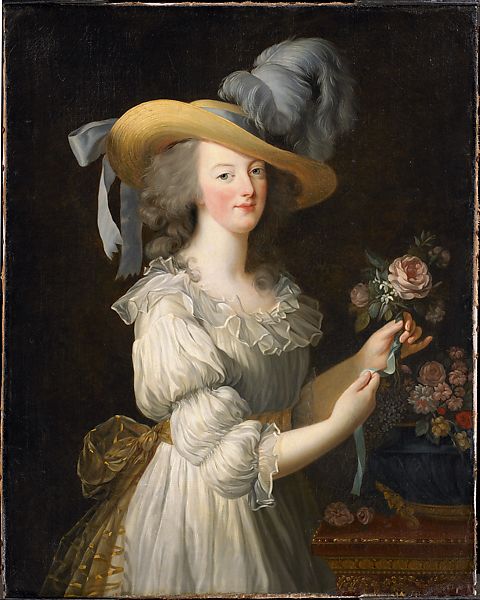
And last but not least, Élisabeth Vigée Le Brun. She contributed a significant amount of work to the rococo and neoclassical style during the classical era. Her work is very unique in that she painted with elements of rococo style but in the form of neoclassicism. Vigée Le Brun is most known for her paintings of Marie Antoinette because she painted her 30 times. She also painted many other members of the French royal court, and she became a favorite of many. A painting of hers that I enjoy is Marie Antoinette in a Chemise Dress because the colors of Marie Antoinette are so soft and it is fascinating to see the detail Vigée Le Brun put into the dress she is wearing. When the French revolution came around, Élisabeth Vigée Le Brun and her daughter had to flee France because her paintings had gotten so popular. During her time, she completed over 900 pictures with 700 of them being portraits, I can’t imagine the days she spent just painting all these pieces.

‘Marie Antoinette in a Chemise Dress‘ (1783) Élisabeth Vigée Le Brun

Citations:

“History – Captain James Cook.” BBC, BBC, www.bbc.co.uk/history/historic_figures/cook_captain_james.shtml.

“Charts and Maps.” Captain Cook Themes – Charts and Maps, www.captcook-ne.co.uk/ccne/themes/charts.htm.

“James Cook.” Biography.com, A&E Networks Television, 26 June 2019, www.biography.com/explorer/james-cook.

Giraudet, Jean-Paul. “William Herschel.” William Herschel | The Classical Composers Database, 25 Mar. 2013, musicalics.com/en/composer/William-Herschel.

Lamont, Ann. “Great Creation Scientists.” Creation.com | Creation Ministries International, creation.com/great-creation-scientists-sir-william-herschel.

“Elisabeth Vigée Le Brun.” Biography.com, A&E Networks Television, 12 Apr. 2019, www.biography.com/artist/elisabeth-vigee-le-brun.

“National Museum of Women in the Arts.” Élisabeth Louise Vigée-LeBrun | National Museum of Women in the Arts, nmwa.org/explore/artist-profiles/élisabeth-louise-vigée-lebrun.

“Elisabeth Louise Vigée Le Brun.” Elisabeth Louise Vigée Le Brun – Introduction, www.batguano.com/vigeeintro.html.

Baroque Art – The Disembarkation of Cleopatra at Tarsus

I personally don’t love this era of paintings because a lot of them include dark colors. I prefer lighter colors in paintings, so ones that came somewhat close to the lightness that I like are some of the landscape paintings by Claude Lorrain. I specifically like the Disembarkation of Cleopatra at Tarsus painting. I enjoy this painting because I like the contrast of the bright sun in the middle of the picture, and then as you move further down the image, it gets darker. I also enjoy that perspective is used on the building in the background. The architecture of the building is stunning and intriguing to look at. This painting is located in the Louvre Museum, it would be so exciting to go to the Louvre and see this painting in person.

The Disembarkation of Cleopatra at Tarsus (1642-1643)

I enjoy that in Lorrain’s pieces, you can still tell that they are from the baroque era because of the colors used, but it is still some “brightness” to his paintings. This painting is meant to represent Queen Cleopatra (in the blue dress), leaving Tarsus to go meet with Mark Anthony. To Lorrain, the people didn’t really matter, it was the landscape that was the main focus point. Although Baroque art is recognized by diagonal lines, Claude Lorrain doesn’t only use them and instead uses vertical lines in a lot of places. There are some diagonals on the ships’ masts, but most of the vertical lines are in the buildings to the right side of the painting.

In my opinion, I think this painting was painted by an influence of royalty. Although not a royalty in the present for Claude Lorrain, the subject (Cleopatra) was a previous queen. Lorrain did paint for royalty though and charged quite the hefty fee when he was starting out. He then started focusing on quality over quantity and lowered his prices.

Citations:

“Great Works of Western Art.” Great Works of Western Art – Cleopatra Disembarking at Tarsus, www.worldsbestpaintings.net/artistsandpaintings/painting/43/.

“Claude Lorrain.” Wikipedia, Wikimedia Foundation, 13 June 2019, en.wikipedia.org/wiki/Claude_Lorrain.

Italian and Northern Renaissance – The Sistine Chapel

The piece I most connected to in this section was the Sistine Chapel ceiling done by Michelangelo. The Sistine Chapel ceiling was done during the Italian Renaissance, and I find it, so awe-inspiring that Michelangelo was able to do all this work above his head. I know first hand how difficult it is to paint ceilings, so to have to be up on scaffolding and work with such a painstaking medium, is just so inspiring. I have great respect for Michelangelo.

The art element that is prominent in Michelangelo’s Sistine Chapel ceiling painting is texture. The medium he used to create this piece of work is no easy task. By using the fresco technique, it definitely gave it a visual texture because it is all plaster and pigment. I think that him using this technique really makes the painting stand out because although it is high up, you can tell that there is still dimension that I don’t think would stand out as much if he were to use a more traditional medium. Another art element that I notice is color. The intensity of the colors in this painting isn’t necessarily loud, bright, and out-there, but I think that that is what makes it unique. Its colors are more toned down, but they still give off the feeling of brightness.

The Sistine Chapel painting has a few humanistic features included in it. Humanism can be summed up nicely in this quote from an Artyfactory article that says, “…this [humanism] meant that any individual could shape their own character and influence their own future by the way they lived their life”. I think that humanism can relate to the Sistine Chapel paintings very well because the way the human forms were painted hadn’t really been done before. For example, “The Creation of Adam” is an excellent representation of humanism because it shows that God is giving Adam the creation of life and making Adam shape his new future.

Sistine Chapel Ceiling – Michelangelo (1508-1512)

I personally have always wanted to visit the Sistine Chapel. So as I was researching, I found it unique that they don’t allow photography in the Sistine Chapel. I like that you are recommended just to take in this beautiful piece with your eyes and not through a camera lens.

Citations:

Shapley, John, and Charles Seymour. “Michelangelo: The Sistine Chapel Ceiling.” Art Journal, vol. 33, no. 4, 1974, p. 366., doi:10.2307/775983.

Yurtoğlu, Nadir. “Michelangelo’s Painting of the Sistine Chapel Ceiling.” History Studies International Journal of History, vol. 10, no. 7, 2018, pp. 241–264., doi:10.9737/hist.2018.658.

Franits, Wayne. “Genre Painting in Seventeenth-Century Europe.” A Companion to Renaissance and Baroque Art, 2013, pp. 422–441., doi:10.1002/9781118391488.ch20.

Kinney, Arthur F. “Literary Humanism in the Renaissance.” Interpretations of Renaissance Humanism, pp. 199–212., doi:10.1163/9789047410249_012.

Art Analysis – Ivan Black

Ivan Black is an artist who makes kinetic art. Kinetic art is art that is based around the movement of the art piece. One of his newest sculptures is based on the Fibonacci sequence that involves moving parts. On his Instagram, he shares all the beautiful artwork he creates. Black has a website that shows all the beautiful sculptures he has created. Most of his sculptures are made out of metal that start to move just by twisting them.

Ivan Black uses many of the elements of art that we learned in his pieces. There are four prominent ones that he uses form, shape, color, and pattern. I think the first one that jumps out the most is ‘form.’ Because these are all sculptures, I feel like constructed form is what would describe his pieces of art the best. The second one that jumps out is ‘shape.’ He uses a lot of geometric, 3-D shapes in his work, predominately squares and circles. Black uses a lot of color in his work as well. Mostly his larger pieces are very bright and colorful, but his smaller pieces made out of metal still have a vibrant feeling because of all the moving parts. The last prominent art element in his sculptures is ‘pattern.’ All of his pieces have a pattern for them to make his sculptures take shape. More specifically, he uses a man-made pattern to display his works of art.

I also think his work displays a lot of emotion, as well. For me, it is satisfying to see his works fit so perfectly together as they spin and twist, it is relaxing to watch. I would love to go to one of his exhibits one day to see these pieces in action. It would be such a fun experience to see artwork like this come to life.

My favorite piece of work of his is this one titled “Blue squares” because it has all the straight lines that I enjoy. It is also pleasing that as it is spinning, it fits perfectly in itself.

Citations:

Black, Ivan. “‘12’ Square Wave in Action.” Instagram, 13 Sept. 2018, www.instagram.com/p/BnrNIIcBz8M/.

Black, Ivan. “Ivan Black Sculpture.” Ivan Black, www.ivanblack.com/about-ivanblack.

Black, Ivan. “‘Blue Rectangles.’” Instagram, 6 July 2018, www.instagram.com/p/Bk5z7NYBdJN/.

Introduction

Hello!

My name is McKenna Kimball, and I am a junior at the University of Alaska, Fairbanks and majoring in civil engineering. I grew up in Ketchikan, Alaska, and I have three siblings who are all my best friends, I don’t know what I would do without them. My favorite animal is a shark, I actually have four large shark tattoos on my arm and I am planning to fill up my whole arm with sharks. I have many other tattoos as well, but I think my sharks are the most unique.

I love artist renditions of flowers and I really enjoy this piece of work. Bouquet of flowers by Edouard Manet (1882)

The type of art I enjoy creating isn’t what people typically think of when they think of art. My favorite thing to do is to give myself tattoos. Although the tattoos aren’t super detailed and shaded, they’re still something to be proud of, and I love thinking of new ideas of what to put on my body even if it is random. Now on the less extreme side, I like to draw and paint, but I don’t have a lot of time to do either. I own a couple pieces of art from very talented artists that I follow on Twitter. I would love to buy more pieces, and one day, I will hopefully be able to support all the artists that I see. I’ve never been to an art museum, but I think that if I were given the opportunity, I would love to go to one.

I also love photography and this video is such an awesome concept to me that, in this case, you can have one model, in the same location, and you can get so many different styles and personalities from each photographer.